CHRONIC PAIN · CLINICAL ASSESSMENT
Chronic pain deserves a wider conversation
Pain that continues for months or years can change sleep, movement, work, concentration and the way you plan each day. A useful consultation should make room for that complete experience—not reduce it to one score. Some people call it chronic pain, others persistent pain — the wording matters less than being heard properly about what it has changed.
Medicanna by DocTel offers private telehealth consultations with Australian-registered practitioners for adults seeking a structured review of chronic pain, including chronic non-cancer pain. The page is designed to help you organise the important details before deciding whether to book.
Your history comes first: the pain pattern, diagnoses, previous care, current medicines and the changes you want to make possible.

Duration
When the pain began, how it has changed and whether it is constant or recurring.
Pattern
Where pain is felt, how it behaves and what triggers or settles a flare.
Function
Its effect on sleep, mobility, work, relationships and everyday independence.
History
Diagnoses, investigations, medicines, therapies and procedures already attempted.
THE CENTRAL QUESTION
What has pain changed in your life?
Two people can use the same diagnosis and still live with very different pain. One may be limited by disturbed sleep and fatigue; another by nerve sensations, reduced mobility or unpredictable flares.
A chronic pain consultation builds a clinical picture from those differences. The practitioner listens for the pattern, reviews possible contributors, examines the sequence of previous care and asks which improvements would be meaningful to you.
This creates a clearer starting point for discussing appropriate options and deciding what information, monitoring or follow-up is needed.
BUILDING YOUR PAIN SIGNATURE
Four lenses create a more useful clinical picture
Before discussing treatment, the consultation organises the information that makes your experience clinically understandable. These four lenses are considered together rather than as isolated checkboxes.
01 · Time and trajectory
When did the pain begin? Did it follow an injury, operation or illness, or develop gradually? Is it stable, worsening, improving or moving between periods of relative calm and flare?
The timeline helps distinguish a recent change from the established pattern and identifies points where further investigation or records may matter. Pain that has lasted or kept recurring beyond three months is generally described as chronic, whatever the original cause and whether or not it is still active.
02 · Sensation and mechanism
Burning, electric, aching, stabbing, pressure and stiffness can point toward different pain features. Location, radiation, numbness, sensitivity and the relationship to movement also add context.
Many chronic presentations are mixed rather than fitting one neat category. The practitioner considers the combination, not simply the vocabulary. Nerve-type sensations point toward neuropathic pain, joint stiffness and swelling toward arthritis-related pain, and many people live with a mixed pattern that will not sit neatly inside either label.
03 · Daily function
Function reveals what pain costs in real life: broken sleep, reduced walking, difficulty sitting, lower concentration, missed work or withdrawing from activities.
These effects also help define useful goals. Progress might mean sleeping longer, tolerating activity, reducing flare disruption or participating more consistently in family and work.
04 · Treatment response
What has been tried, for how long, and what happened? A treatment can be unhelpful because of inadequate relief, side effects, access, cost or practical demands.
That distinction prevents the history becoming a simple list of “failed” treatments and gives the practitioner a better basis for the next conversation.
THE HISTORY BEHIND THE APPOINTMENT
Previous care is evidence, not a judgement
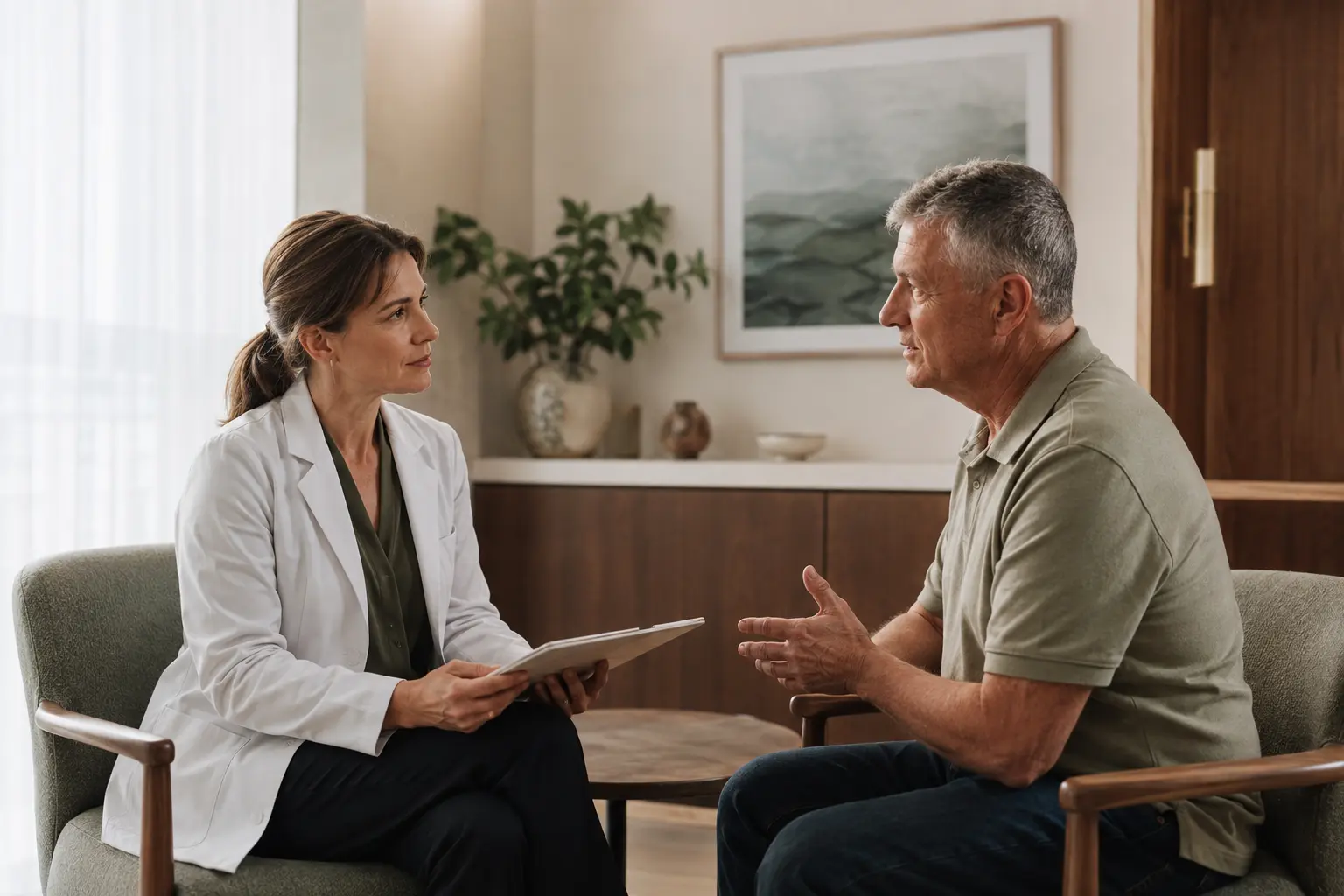
People with chronic pain often arrive after years of appointments, medicines, physical therapies, procedures, self-management and advice from different sources. That history deserves to be understood rather than compressed into a sentence.
Your practitioner may ask what you tried, how long you continued, what changed, what caused difficulty and why an option was stopped. Even partial benefit or an unwanted side effect can contribute useful information.
A simple timeline is enough Common categories worth listing include pain medicines, anti-inflammatories, physiotherapy or exercise programs, psychological support and any injections or procedures: the main diagnosis or event, important investigations, treatments attempted and the results you remember. If essential records are missing, the practitioner can identify what should be obtained.
YOUR TREATMENT TIMELINE
Bring the sequence, not a perfect medical archive
A
What started the story?
Note the approximate onset, diagnosis, injury, operation or health change connected with the pain. Include major scans or specialist findings if known.
B
What was tried first?
List the main medicines, physical therapies, procedures, lifestyle strategies or specialist recommendations and how long you used them.
C
What changed?
Record useful effects, limitations, side effects and practical barriers. “Stopped” is less informative than explaining why the treatment ended.
D
What matters now?
Identify the activities, responsibilities or aspects of daily life you most want to improve. These goals give future reviews a meaningful baseline.
CLINICAL DECISION FRAMEWORK
How the practitioner organises the assessment
The appointment connects your experience with the clinical information required to discuss suitable next steps. The decision is individual because pain type, diagnoses, medicines, risks, goals and treatment history differ between patients. The table below outlines how a chronic non-cancer pain assessment is typically organised, including the mobility, sleep and daily-function detail that turns a symptom description into a plan.
| Assessment area | What the practitioner explores | Why it matters |
|---|---|---|
| Pain presentation | Duration, location, sensation, triggers, flares and associated symptoms | Clarifies the pattern and whether more information is required |
| Clinical background | Diagnoses, investigations, operations and specialist involvement | Places the current symptoms within the wider medical history |
| Current treatment | Medicines, therapies, response, side effects and interactions | Shows what is active now and what needs careful consideration |
| Function and goals | Sleep, mobility, work, mood, participation and priorities | Creates practical outcomes that can be reviewed over time |
| Follow-up needs | Records, monitoring, precautions and review timing | Turns the consultation into a plan rather than a one-off discussion |
MEDICINAL CANNABIS AND PAIN
Where chronic non-cancer pain fits
Chronic non-cancer pain is included within Australian medicinal cannabis access pathways. During a Medicanna consultation, an Australian-registered practitioner considers whether medicinal cannabis belongs in the wider discussion for your circumstances. That conversation is equally relevant across chronic non-cancer pain presentations — including neuropathic pain, arthritis-related pain and mixed pain patterns — wherever earlier treatments have not achieved an acceptable balance of relief and side effects.
The review includes the pain presentation, diagnoses, previous treatment response, current medicines, relevant medical and mental-health history, potential interactions, practical safety issues and the ability to monitor treatment over time.
The conversation may cover formulation, individualised dosing principles, impairment, driving, pharmacy supply and follow-up. It can also help separate clinical information from product-led marketing, online claims and other people’s experiences.
Read the Australian medicinal cannabis guide or explore how the prescription pathway works before your appointment.
Questions worth asking
- How does this option fit with my current medicines and existing care?
- What changes in symptoms or function would we monitor?
- What practical precautions apply to driving, work, travel or other responsibilities?
- How are formulation and dosing decisions individualised?
- When should treatment be reviewed, adjusted or reconsidered?
Write down the questions that matter to your circumstances. A good clinical conversation should leave you understanding the reasoning, practical responsibilities and follow-up—not merely the name of an option.

YOUR ONLINE APPOINTMENT
Prepare for a focused conversation
Choose a quiet private location and allow enough time to explain the history without rushing. Keep your medication list, relevant reports and the contact details of your usual GP or specialist nearby.
You do not need to produce a perfect file. Write down the main symptoms, significant treatments, questions you want answered and two or three changes that would matter most in daily life.
The consultation is a two-way discussion. Ask why an option is being considered, how it fits with existing care, what precautions matter and how progress would be reviewed. Telehealth suits most chronic pain reviews, but if your practitioner needs an in-person examination, further investigations or specialist input, they will explain why and what the next step looks like.
Have nearby
Medication list, allergies, relevant reports and pharmacy details.
Write down
Your pain pattern, recent changes, previous treatment response and questions.
Think about
The functional changes that would make treatment meaningful to you.
THE COST ANATOMY
Look beyond the first appointment fee
The complete pathway can include consultation, medicine, dispensing, delivery and follow-up. Private medicinal cannabis products are generally paid for by the patient rather than billed to Medicare.
Actual medicine costs vary with formulation, dose, pack size and pharmacy pricing. Review the Medicanna cost guide before booking so you can plan for the full pathway. How often follow-up and monitoring are needed also affects the total cost over time, not only the price of the first appointment.
01 · Consultation
The practitioner’s time, history review and clinical assessment.
02 · Medicine and dispensing
Separate costs determined by formulation, supply and pharmacy pricing.
03 · Follow-up
Review of response, tolerability, function and any required changes.
CONTINUE WITH RELIABLE INFORMATION
Three guides for the next question
Australian guide
Understand the national framework, access pathways and the role of clinical assessment.
Prescription pathway
See how practitioner assessment, prescribing decisions and pharmacy dispensing connect.
Cost guide
Plan for consultation, medicine, dispensing, delivery and follow-up expenses.
QUESTIONS TO BRING WITH YOU
Before the consultation
These answers provide a starting point. Your appointment is where general information is connected to your own pain history, medicines, priorities and clinical circumstances. Ongoing monitoring and any follow-up plan are also worked out with you, not fixed in advance.
What is considered chronic pain?
Chronic pain generally refers to pain that lasts or recurs for longer than three months. It may continue after an injury has healed, arise from an ongoing condition or occur without one simple explanation. The assessment considers duration, pattern, likely contributors and the effect on everyday function.
Is persistent pain the same as chronic pain?
The terms are often used in similar ways. “Chronic pain” is the established clinical and search term, while “persistent pain” can feel less defining. What matters most is explaining how long the pain has been present, how often it occurs and what it prevents you from doing.
Can medicinal cannabis be prescribed for chronic non-cancer pain?
Chronic non-cancer pain is included within Australian medicinal cannabis access pathways. Prescribing follows an individual clinical assessment covering the pain presentation, treatment history, current medicines, relevant conditions, potential interactions and follow-up plan.
Can arthritis or neuropathic pain be discussed?
Yes. Arthritis, neuropathic pain and mixed pain patterns can be discussed in a chronic pain consultation. Bring information about diagnoses, imaging, specialist input and previous treatment where available.
Do I need to have tried other treatments?
Previous treatment history is important because it shows what has been attempted, what helped, what caused side effects and what remains unresolved. Bring the information you have; the practitioner can identify any additional records needed.
What happens during an online chronic pain consultation?
You meet privately with an Australian-registered practitioner by telehealth. The appointment covers your pain history, diagnoses, daily function, previous care, current medicines and goals. You can ask questions and discuss appropriate next steps and follow-up.
How is progress monitored after a consultation?
Chronic pain care is rarely a single appointment. Your practitioner may schedule a follow-up review to check how you are responding, whether function and sleep are changing, and whether any adjustment or further information is needed. The timing and frequency of review are agreed with you rather than fixed in advance.
WHEN YOU ARE READY
Turn a long pain history into a clearer clinical conversation
Bring what you know, the treatments you have tried and the changes you want to make possible. The practitioner will help organise the next discussion. A long pain history is not a complication to apologise for — it is exactly the wider conversation this page opened with.